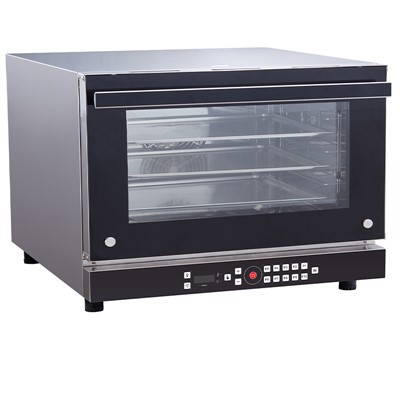
As a provider of countertop oven convection, I’ve encountered a wide range of issues customers face with these versatile kitchen appliances. Countertop oven convection units offer numerous benefits, from faster cooking times to more even heat distribution. However, like any technology, they can sometimes run into problems. In this blog post, I’ll walk you through some common issues users experience with countertop oven convection and how to troubleshoot them. Countertop Oven Convection
1. Oven Not Heating Up
One of the most common issues users report is that the countertop oven convection does not heat up. This can be frustrating, especially when you’re in the middle of preparing a meal. Here are a few steps to diagnose and potentially solve this problem:
Check the Power Supply
The first thing you should do is ensure that the oven is properly plugged in. A loose connection can prevent the oven from receiving power. Make sure the plug is firmly seated in the outlet, and if possible, test the outlet with another device to confirm it’s working. If the outlet is not functioning, you may need to check your circuit breaker or fuse box to see if a breaker has been tripped or a fuse has blown.
Examine the Heating Elements
The heating elements are responsible for generating the heat in the oven. Over time, they can burn out or become damaged. To inspect the heating elements, you’ll need to access them. Refer to your oven’s user manual for instructions on how to safely remove the back or bottom panel to expose the elements. Look for any signs of damage, such as breaks or discoloration. If you notice any issues with the heating elements, they may need to be replaced. You can order replacement elements from the manufacturer or a reputable appliance parts supplier.
Test the Temperature Sensor
The temperature sensor, also known as the thermostat, is another critical component that can cause heating problems. If the sensor is malfunctioning, it may not accurately detect the temperature inside the oven, leading to improper heating. To test the temperature sensor, you can use an oven thermometer. Preheat the oven to a specific temperature, then place the thermometer inside and let it sit for a few minutes. Compare the reading on the thermometer to the set temperature on the oven. If there is a significant discrepancy, the temperature sensor may need to be replaced.
2. Uneven Heating
Another issue that users often encounter is uneven heating. This can result in some parts of the food being overcooked while others are undercooked. Here’s how you can address this problem:
Adjust the Rack Placement
The position of the racks in the oven can significantly affect how evenly the heat is distributed. If you notice that food is cooking unevenly, try adjusting the rack placement. For most convection ovens, placing the rack in the middle position provides the most even heat distribution. However, you may need to experiment with different rack positions depending on the type of food you’re cooking.
Ensure Proper Air Circulation
Convection ovens work by circulating hot air around the food, which helps to cook it more evenly. To ensure proper air circulation, make sure the oven is not overcrowded. Overcrowding can block the airflow, leading to uneven heating. When placing food in the oven, leave enough space between items to allow the hot air to circulate freely. Additionally, make sure the convection fan is working correctly. Refer to your oven’s user manual for instructions on how to check the fan. If the fan is not spinning, it may need to be cleaned or replaced.
Calibrate the Oven
Over time, the oven’s temperature calibration may become inaccurate, leading to uneven heating. Many modern countertop oven convection units allow you to calibrate the temperature. Refer to your oven’s user manual for instructions on how to access the calibration settings. You can use an oven thermometer to determine the actual temperature inside the oven and adjust the calibration accordingly.
3. Convection Fan Not Working
The convection fan is a crucial component of a countertop oven convection unit. It helps to circulate the hot air, which results in faster and more even cooking. If the convection fan is not working, you may notice that food is taking longer to cook or that it’s not cooking evenly. Here’s how you can troubleshoot this problem:
Check for Obstructions
The first thing you should do is check for any obstructions that may be preventing the fan from spinning. Open the oven door and inspect the fan for any debris, such as food particles or cleaning materials. If you find any obstructions, carefully remove them using a soft brush or cloth.
Test the Fan Motor
If there are no obstructions, the issue may be with the fan motor. To test the fan motor, you’ll need to access it. Refer to your oven’s user manual for instructions on how to safely remove the necessary panels to expose the motor. Use a multimeter to test the motor for continuity. If the motor does not have continuity, it may need to be replaced. You can order a replacement motor from the manufacturer or a reputable appliance parts supplier.
4. Display or Control Panel Issues
Problems with the display or control panel can make it difficult or impossible to operate the oven. Here’s how you can troubleshoot these issues:
Check the Wiring
Loose or damaged wiring can cause problems with the display or control panel. To check the wiring, you’ll need to access the back of the oven. Refer to your oven’s user manual for instructions on how to safely remove the back panel. Inspect the wiring for any signs of damage, such as frayed wires or loose connections. If you notice any issues, carefully reconnect or replace the wires as needed.
Perform a Reset
Sometimes, a simple reset can solve display or control panel issues. To reset the oven, unplug it from the power outlet and leave it unplugged for at least 30 seconds. Then, plug it back in and see if the problem persists. If the display or control panel is still not working correctly, the issue may be with the control board. In this case, you’ll need to contact a professional technician for further diagnosis and repair.
5. Strange Noises
Strange noises coming from the oven can be a cause for concern. Here are some common causes of strange noises and how to address them:
Loose Parts
Over time, parts inside the oven can become loose, which can cause rattling or vibrating noises. To check for loose parts, open the oven door and gently shake the oven. Listen for any rattling noises. If you hear a rattling noise, carefully inspect the inside of the oven for any loose parts, such as screws or brackets. If you find any loose parts, tighten them using a screwdriver or wrench.
Faulty Fan
A faulty fan can also cause strange noises. If you notice a scraping or grinding noise coming from the oven, the fan may be damaged or misaligned. To check the fan, open the oven door and visually inspect it for any signs of damage or misalignment. If you notice any issues, the fan may need to be replaced.
Conclusion

In conclusion, troubleshooting common problems with a countertop oven convection can often be done by following a few simple steps. By checking the power supply, examining the heating elements, testing the temperature sensor, adjusting the rack placement, ensuring proper air circulation, calibrating the oven, checking for obstructions, testing the fan motor, inspecting the wiring, performing a reset, and checking for loose parts or a faulty fan, you can often identify and solve the problem. However, if you’re unable to troubleshoot the issue on your own, it’s important to contact a professional technician for further diagnosis and repair.
CHIP WARMER If you’re experiencing persistent problems with your countertop oven convection or are in the market for a new unit, I encourage you to reach out to me for more information. As a trusted countertop oven convection provider, I can offer you high – quality products and expert advice. I’m here to help you find the perfect solution for your kitchen needs. Whether you’re a home cook or a professional chef, I’m confident that my products will meet your expectations. Contact me to start a discussion about your procurement needs, and let’s work together to enhance your cooking experience.
References
- Various user manuals of countertop oven convection models.
- Appliance repair guides and literature on small kitchen appliances.
- Personal experience as a countertop oven convection provider.
Foshan Frespro Industries Co., Ltd.
Foshan Frespro Industries Co., Ltd. is one of the most experienced countertop oven convection manufacturers and suppliers in China, featured by quality products and good price. We warmly welcome you to buy advanced countertop oven convection for sale here and get quotation from our factory. Customized orders are welcome.
Address: No.24, 1ST DISTRICT, FUAN INDUSTRIAL ZONE, LIANDU LELIU, SHUNDE FOSHAN, GUANGDONG CHINA
E-mail: lisa@dezaoequip.cn
WebSite: https://www.fresproeq.com/
