Hey there, fellow electrical enthusiasts! I’m a supplier of Transformer Capacitance and Tan Delta Testers, and today I wanna talk about the measurement ranges of capacitance and tan delta for these nifty devices. Transformer Capacitance and Tan Delta Tester
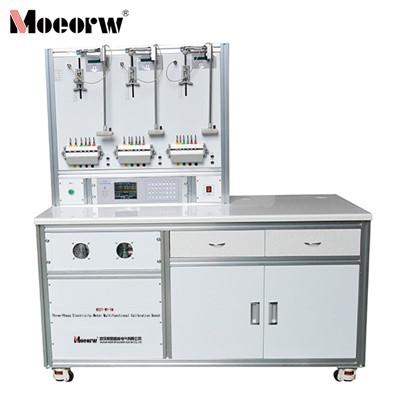
Let’s start with capacitance. Capacitance is basically a measure of how much electrical energy a capacitor (or in our case, parts of a transformer) can store in an electric field. It’s measured in farads (F), but in the real – world of transformer testing, we usually deal with much smaller units like microfarads (μF) and picofarads (pF).
Most of the Transformer Capacitance and Tan Delta Testers out there have a wide range of capacitance measurement capabilities. For small – scale transformers or components within a transformer, the lower end of the measurement range can go down to a few picofarads. For example, some of the more sensitive testers we provide can measure capacitances as low as 10 pF. This is super important because in high – voltage transformers, there are often tiny capacitances between different windings and insulation layers that can have a big impact on the overall performance of the transformer.
On the upper end of the scale, our testers can measure capacitances up to several microfarads. A typical range might be from 10 pF to 20 μF. When dealing with larger transformers or assemblies, the capacitance values can be relatively high. For instance, the capacitance between the primary and secondary windings of a large power transformer might be in the microfarad range. Having a tester that can accurately measure across this wide range is crucial for getting a complete picture of the transformer’s electrical characteristics.
Now, let’s move on to tan delta. Tan delta, also known as the dissipation factor, is a measure of the dielectric losses in an insulating material. In simple terms, it tells us how much energy is being lost as heat when an alternating current is passed through the insulation of a transformer.
The measurement range for tan delta is usually expressed as a percentage. Our Transformer Capacitance and Tan Delta Testers can measure tan delta values from very small percentages up to relatively large ones. The lower end of the range can be as low as 0.01%. This is important for detecting very small levels of deterioration in the insulation. Even a tiny increase in tan delta can be an early sign of problems like moisture ingress or partial discharges in the insulation.
On the upper end, the measurement range can go up to around 10%. Normally, a healthy transformer insulation should have a very low tan delta value, well below 1%. But as the insulation ages, or if there are issues like overheating or contamination, the tan delta can increase significantly. By being able to measure up to 10%, our testers can help identify severely damaged insulation that might need immediate attention.
Why are these measurement ranges so important? Well, accurate measurement of capacitance and tan delta is essential for assessing the condition of a transformer’s insulation. Insulation is like the lifeblood of a transformer. If it fails, the transformer can short – circuit, leading to power outages, equipment damage, and potentially dangerous situations.
For example, if the measured capacitance is outside the normal range, it could indicate a physical change in the transformer, such as a short – circuit between windings or a breakdown in the insulation. Similarly, an abnormal tan delta value can be a red flag for insulation degradation. By regularly testing the capacitance and tan delta of a transformer using our testers, power utilities and industrial users can detect potential problems early and take preventive measures. This can save a lot of money in the long run by avoiding costly repairs or replacements of transformers.
Another aspect to consider is the accuracy of the measurements. Our testers are designed to provide highly accurate results within these measurement ranges. We use advanced technology and high – quality components to ensure that the readings are as precise as possible. This means that you can trust the data you get from our testers to make informed decisions about the condition of your transformers.
We also understand that different customers have different needs. Some might be dealing with small distribution transformers, while others are working with large power transformers. That’s why our testers are customizable to some extent. We can adjust the measurement ranges and other settings to better suit your specific requirements.
If you’re in the market for a Transformer Capacitance and Tan Delta Tester, you should definitely look for a device that has a wide and accurate measurement range for both capacitance and tan delta. And that’s where we come in! We’ve been in the business for a while, and we know what it takes to provide a reliable and effective testing solution.
Our team of experts is always ready to help you choose the right tester for your needs. Whether you’re a small – scale electrical contractor or a large power utility, we have a solution that will work for you. We can also provide training and support to make sure you get the most out of your tester.
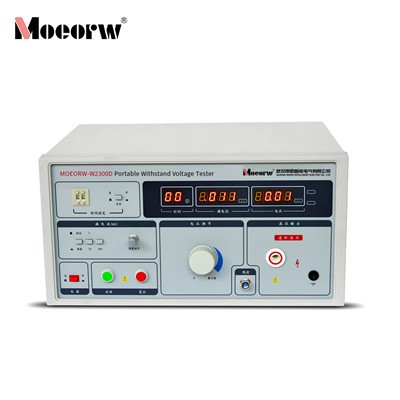
So, if you’re interested in learning more about our Transformer Capacitance and Tan Delta Testers, or if you want to discuss your specific requirements, don’t hesitate to reach out. We’re here to help you keep your transformers in top – notch condition and ensure the smooth operation of your electrical systems.
Others References:
- Electrical Insulation Handbook, McGraw – Hill
- Transformer Testing Guide, IEEE Standards Association
Wuhan Moen Intelligent Electric Co., Ltd.
As one of the most professional transformer capacitance and tan delta tester manufacturers in China, we’re featured by quality products and good price. Please rest assured to buy high quality transformer capacitance and tan delta tester in stock here and get quotation from our factory. Customized orders are welcome.
Address: Building A, No.1, Fenghuangyuan 2nd Road, Donghu New Technology Development Zone, Wuhan, Hubei, China
E-mail: info@hvhipotsystem.com
WebSite: https://www.hvhipotsystem.com/
