If you’ve ever walked through a manufacturing plant, a data center, or a modern retail mall, you’ve probably passed low voltage (LV) switchgear without giving it a second thought. That unassuming metal cabinet sitting against a wall is the backbone of how electricity is distributed safely to every piece of equipment, light, and outlet in that space. As an LV switchgear supplier with over a decade in the game, I hear the same question over and over again: “Can this stuff even be customized?” The short answer is a resounding yes—but let me tell you, it’s not just about tweaking a dimension or swapping a color. Custom LV switchgear is the difference between a system that fits your space perfectly and one that forces you to compromise on safety, efficiency, or functionality. Low Voltage Switchgear
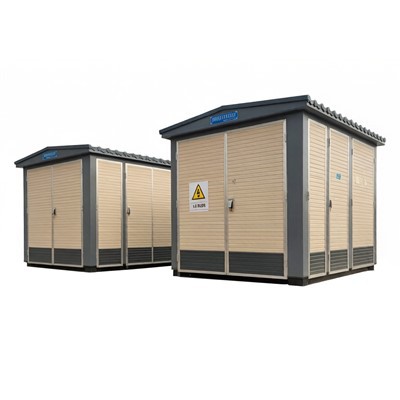
I’ve seen what happens when customers try to force off-the-shelf switchgear into a unique setup. Two years back, I worked with a food processing plant that had a production line tailored for organic grain milling. Their initial purchase of a standard LV switchgear unit left them with a gaping hole between the cabinet and a load-bearing concrete column, which became a magnet for dust and debris. Worse, the factory’s specific power demand for their new cold storage annex was 15% higher than the standard unit’s rated capacity, so they were running at 98% load—way too close to the edge for consistent operation. It took us three weeks to design and install a custom unit that fit the exact wall space, included a built-in filter system to keep grain dust out, and had a busbar configuration calibrated to their cold storage’s unique power draw. The plant manager told me later that that custom unit cut their unplanned downtime by 30% in the first year. That’s the kind of impact customization isn’t just a luxury—it’s a solution.
Let’s break down what “customization” actually means for LV switchgear, because it’s not a one-size-fits-all category. First, there’s physical customization. Standard switchgear comes in a handful of pre-sized enclosures, but not every facility has a utility closet that’s 48 inches wide by 80 inches tall. Hospitals, for example, often have limited space near their critical care wings, where LV switchgear can’t block emergency corridors or interfere with existing plumbing and HVAC lines. We designed a ultra-slim, floor-to-ceiling custom unit for a children’s hospital in Chicago last year that fit into a 30-inch wide nook that was originally meant for a janitor’s sink. It still housed all the required circuit breakers, metering, and fault protection—but it was narrow enough to squeeze into a space no standard unit could touch. There’s also modular physical customization: if a customer is expanding their facility in six months, we can design a base unit today that has pre-wired slots for future circuit breakers, so they don’t have to rip out and replace the entire cabinet when they grow. That saves them tens of thousands in retrofitting costs down the line.
Next, functional customization is where most of the real value lives. Every industry has unique electrical needs, and standard switchgear is built for average use cases. Data centers, for instance, require redundant power systems that can switch between sources in less than two milliseconds to avoid downtime for servers. A standard unit’s transfer switch might take five times that long, which would be catastrophic. We worked with a regional data center provider a few years back to integrate a custom microprocessor-based transfer relay into their LV switchgear, cutting switchover time to 1.8 milliseconds. That meant they could keep their cloud hosting operations running without a hitch, even during a power grid flicker that would have knocked smaller providers offline. Then there’s industrial manufacturing: metal fabrication plants have high inrush currents from large welders and cranes, which can trip standard circuit breakers. We designed custom thermal-magnetic trip units that account for that surge, so the plant doesn’t lose power every time a crane starts up. And for commercial buildings like shopping malls, we can add sub-metering modules that track power use per floor or per tenant, so property managers can bill tenants accurately and identify wasteful energy usage.
Don’t let anyone tell you customization is just for big operations, either. I regularly work with small businesses—like a local craft brewery that wanted to automate their fermentation tanks’ power supply, or a dentist’s office that needed a backup power system for their X-ray and dental equipment. A standard unit would have too many extra circuits they didn’t need, making it more expensive than necessary, while a too-small unit would leave them vulnerable to outages. For the brewery, we designed a compact custom LV switchgear unit that only had the four circuits they needed for their fermentation lines, plus a small backup generator interface that fit on the side of the cabinet. It cost them 20% less than a standard unit that included 12 extra circuits they’d never use, and it was installed in a single day without disrupting their production schedule. That’s the thing about custom: it’s tailored to your exact load, so you only pay for what you need.
Now, I know what some people are thinking: “Custom means it’s more expensive, right?” It’s a fair question, and early in my career, I used to worry that cost would scare customers off. But over time, I’ve learned that the total cost of ownership for custom switchgear is almost always lower than off-the-shelf. Let’s go back to that food processing plant I mentioned earlier. The standard unit they first bought was $12,000, while our custom unit was $18,000 at first glance. But when the standard unit started causing downtime—three unplanned outages in six months, each costing them $5,000 in lost production—plus the cost of retrofitting to fill that gap, they ended up spending over $30,000 before we installed the custom unit. The custom unit cost more upfront, but it eliminated those downtime costs, and it had a 15-year lifespan vs. the standard unit’s 10 years. Over the long run, that’s a no-brainer. Custom switchgear also reduces future modification costs: if a customer’s power needs change, we can add new circuits or adjust configurations without replacing the entire cabinet, which cuts waste and saves money.
There’s another common misconception: that custom switchgear takes forever to build. When I started in this business, that was true—back in the early 2000s, custom units could take 8 to 12 weeks to deliver. But advances in design software and modular manufacturing have cut that timeline down drastically. Today, with computer-aided design (CAD) tools that let us adjust layouts in real time and pre-fabricated components that we can assemble on-site or in our workshop, most custom orders take 3 to 5 weeks. For time-sensitive projects—like a hospital adding a new wing or a data center planning a launch—we even offer expedited custom builds that can be done in 10 days, as long as the scope is clearly defined upfront. I always tell customers that the key to fast delivery is clear communication: if you can give us your exact space dimensions, power load calculations, and future needs on the first call, we can start designing and building right away, no back-and-forth delays.
As an LV switchgear supplier, I also have to talk about safety, because that’s non-negotiable. Some people worry that custom units might not meet industry standards, but that’s a myth. All of our custom switchgear is built to comply with global standards like IEC 61439, as well as local codes like NEC in the U.S. and BS EN in the UK. Every component is tested at our in-house lab before it leaves the workshop, and we provide full documentation so engineers and inspectors can verify compliance. We also work directly with customers’ electrical engineers to make sure the design aligns with their facility’s specifications. Last year, a manufacturing plant in Texas had a strict requirement for arc flash protection, which is a critical safety feature that prevents injury if there’s a fault in the system. We designed a custom arc-resistant LV switchgear unit that included pressure relief vents and transparent barriers, which not only met their exact arc flash boundary requirements but also fit their existing utility connections. The inspector signed off on it on the first visit—something that doesn’t always happen with off-the-shelf units that don’t match local codes.
I’ve also seen how custom switchgear supports sustainability, which is a big priority for more and more businesses these days. Standard switchgear is often over-sized, which means it uses more energy to operate than necessary. Custom units are built to match your exact power demand, so there’s no unnecessary energy waste. We’ve integrated energy monitoring systems into many of our custom builds, which track real-time power use and help customers identify ways to reduce consumption. For example, a grocery chain we worked with recently installed custom LV switchgear for their new refrigerated food section. The system adjusts the power supply based on the outside temperature and the number of customers in the store, cutting their refrigeration energy use by 12%—that’s over $20,000 a year in utility savings, plus a 15% reduction in their carbon footprint.
Let’s talk about the process of getting custom LV switchgear, because it’s not as complicated as you might think. It starts with a simple conversation: when you reach out to a supplier, you share your needs. What’s the available space for the cabinet? What’s your peak power demand? Do you need backup power, sub-metering, or arc flash protection? Are you planning to expand your facility in the next 5 years? Once we have that information, our design team creates a 3D CAD model of the custom switchgear, which you can review and adjust. We’ll send you a detailed quote that includes the build timeline, testing, and any required installation support. Once you approve the design, we build the unit in our workshop, test every component, and deliver it to your site. We can also provide installation services, or work with your contracted electrician to make sure it’s set up correctly, with full training for your team on how to operate and maintain the system.
I know that for some businesses, investing in custom equipment can feel like a big step, but at the end of the day, LV switchgear is the quiet workhorse that keeps your operations running. A poorly fitted, under-sized, or inefficient system can lead to downtime, safety hazards, and higher costs down the line. Custom switchgear solves those problems by fitting your space, matching your power needs, and adapting to your future growth. Over my years in this industry, I’ve seen small shops and large corporations alike benefit from customization—from a local bakery to a national logistics company—and there’s no reason your business shouldn’t too.
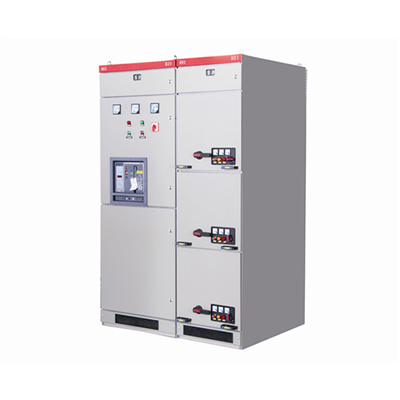
If you’re tired of settling for switchgear that doesn’t quite fit, doesn’t deliver the performance you need, or costs you more in the long run, let’s talk. We can walk through your project, answer any questions you have about customization, and help you design a solution that’s perfect for your facility. Whether you need a compact unit for a small office or a large, modular system for a manufacturing plant, we have the expertise to deliver a custom LV switchgear solution that meets your needs, fits your budget, and keeps your operations safe and efficient.
Low Voltage Switchgear References
- International Electrotechnical Commission. IEC 61439: Low-voltage switchgear and controlgear assemblies.
- U.S. National Fire Protection Association. NFPA 70: National Electrical Code.
- International Association of Electrical Inspectors. Custom Switchgear Best Practices.
- Energy Star. Commercial Building Energy Efficiency Guide.
Anhui Xinchen Electrical Equipment Co., Ltd.
We are one of the most reliable low voltage switchgear manufacturers and suppliers in China, specialized in providing high quality customized products. We warmly welcome you to buy bulk low voltage switchgear for sale here from our factory. Contact us for quotation.
Address: No. 8, Waihuan South Road, Economic and Technical Development Zone, Ningguo City, Xuancheng City, Anhui Province
E-mail: xinchen0316@126.com
WebSite: https://www.cn-xinchen.com/
