Hey everyone, it’s Jake from the PVC wood grain film crew—you know, the people you hit up when you need that exact realistic wood look without the expensive, fussy real wood. Today I’m answering a question I get literally every week: “Can PVC wood grain film be used on display cases?” Spoiler: The short answer is HELL YES—but let me break down why, how, and why it’s actually better than half the stuff display case makers are using right now. No boring jargon, no sales fluff, just real talk from someone who’s been shipping this film for 6 years. PVC Wood Grain Film

First, let’s get one thing straight: Display cases aren’t just for holding stuff. If you’re making a display case—whether it’s for a boutique’s luxury watches, a museum’s tiny ceramic relics, a sneaker store’s limited-edition kicks, even a local café’s pastry cases—you want two non-negotiables: it needs to look good enough to make people stop and stare, and it needs to hold up to the chaos of daily use. Think about it: display cases get dusted every other day, wiped down with cleaners (sometimes harsh ones by accident), bumped when someone reaches for a product, and placed under lights 24/7. Real wood? It scratches, warps, fades when under heat from those display lights, and it’s a nightmare to finish right—especially for mass-produced cases. MDF panels? They’re cheap but they’re just… boring, and they scuff instantly.
Now, let’s talk about what our PVC wood grain film actually is (no, it’s not that flimsy stuff you stick on cabinets and it peels in a year). The stuff we supply is extruded PVC—super durable, not the thin cheap grade—and we print the grain using high-res digital presses, so it looks like actual white oak, walnut, even that weird reclaimed barn wood vibe you see in hipster stores. We add a UV-stabilized coating on top too, which is key for display cases that sit under spotlights. Wait, let’s confirm that science for a sec: UV rays from display case lights (or even sunlight through a window) break down organic materials like wood’s natural lignin, which is what makes it fade. Our film’s top coat blocks 95% of that UV, so the grain doesn’t turn yellow or chalky after 2 years—something real wood can’t promise, even with poly coat.
Let’s get specific about where it works on display cases, because not every part of a display case is the same. First, the sides and back panels—those are the big, flat surfaces that people see first. We’ve sent film to a bunch of custom display case makers who line their back panels with that deep walnut grain to make watch dials pop, and they say customers actually ask where they got the “real wood panels” because they can’t tell it’s film. Then there are the drawer fronts if the display case has them—like in a jewelry store, where they keep extra necklaces. They get tugged on all the time, so scuff resistance is huge. Our film has a scratch-resistant top coat too; we tested it with a key (don’t ask, one of our interns was playing around) and it didn’t leave a mark, whereas MDF would have a permanent indent.
What about the tricky parts, like the edges? A lot of people say “PVC film won’t bend around sharp display case edges, so it’s useless.” Nah, that’s only if you’re using cheap thin film. Our PVC is flexible—we make a “formable” grade specifically for curved edges and even small contours. We worked with a museum last year that needed display cases for 100-year-old pocket watches, and they had these rounded front edges; they were using real wood veneer before, which kept peeling off the curves. They switched to our formable wood grain film, and their installers said it went on smooth, no bubbles, no lifting, even after they heated it a little with a heat gun to get it to stick tight to the curve. That’s the thing—you just need the right grade of film, not the cheapest roll you can find on Amazon.
Wait, let’s address the elephant in the room: “Is it safe for things inside display cases?” Because if your display case is for food, or museum artifacts, or even kids’ toys, you can’t have chemicals leaching. Our PVC film is food-safe for the grade used on food display cases—we tested it for FDA compliance, so a pastry case lined with this is totally fine, no weird fumes getting into the croissants. For museum use, we have a low-VOC grade too; we worked with a small local history museum on their Civil War relic display, and they needed something that wouldn’t off-gas and damage their old documents. The curator was shocked that it didn’t leave any residue, and it matched the oak display case they wanted without the cost of custom real wood.
Now, why is this actually better than the alternatives? Let’s do a quick cost breakdown (no, I don’t have exact numbers, just what our clients tell us). Real wood veneer costs like $25-$40 a square foot installed, right? Our PVC wood grain film is like $2-$5 a square foot, plus installation is faster because you don’t have to sand, stain, poly, wait for it to dry. One display case maker we work with says they cut their production time for each case by 30% because they can just cut the film to size, stick it on, and move on—no finishing waiting around. Also, if a display case gets a scratch or a scuff down the line, you don’t have to sand the whole panel and restain it. You just peel off the old film (it comes off easy, no residue, we tested that too) and stick a new piece on. Super quick, cheap touch-up, way easier than fixing real wood.
But wait, there are a few things you gotta do right if you’re using this film on display cases, no exceptions. First, prep the surface. It has to be smooth, clean, no dust or grease—if there’s a spot on the MDF or plywood, the film will bubble there. We always tell clients to sand the panels lightly, wipe them down with isopropyl alcohol before applying, that’s non-negotiable. Second, use the right adhesive. We supply a pressure-sensitive acrylic adhesive that’s made specifically for this film, not the cheap glue you get at hardware stores. That glue doesn’t yellow, doesn’t lift in humidity (which is a big one—display cases for bathrooms or cafes can get steamy), and it’s strong enough that it won’t pull off even if someone bumps the display case hard. Third, pick the right grain and grade. Don’t use a cheap thin film for a high-end jewelry display—our heavy-duty UV-stabilized grade is worth the extra couple bucks because it won’t fade. And if you need curves, ask for the formable grade, it’s not a big upgrade, just a different formulation.
I know a lot of people still have that old stereotype that PVC is cheap plastic that looks fake, but let’s be real—those days are gone. We’re using 1080p digital print heads to lay down the grain, so you can see the subtle variations in the wood, the knots, the tiny lines that make real wood look real. A customer brought a display case he made for his 10-year-old son’s baseball card collection to our trade show last year—he used our walnut grain film, and no one at the show could tell it wasn’t real wood until he peeled off a tiny corner to show us. That’s the kind of quality we’re putting out now.
Another thing we hear: “Will it hold up under constant lighting?” Like I said earlier, our top coat is UV-stabilized, so it blocks most of the bad rays. We have a display case that we lined with our film 4 years ago, and it’s still the same color as the day we put it in—no yellowing, no fading. We even tested it in a accelerated UV chamber (it simulates 5 years of sunlight in 2 weeks) and it didn’t change at all. Real wood would have turned a brownish-yellow and lost its grain detail in that same time, so that’s a huge win for display cases that are on display long-term, like museum exhibits or permanent store fixtures.
Wait, what about if you’re making custom, one-off display cases for high-end clients? Can you use this film? 100%. We can do custom grain matches—if you send us a sample of the exact wood you want, we can print the grain to match it perfectly. We did that for a luxury watch boutique in New York a while back; they had an old oak display case they loved, and they wanted to make new matching ones for their new location. They sent us a small piece of the old case, we scanned the grain, printed it on our film, and it was identical. Way cheaper than making new real wood cases, and it was done in half the time.
Now, let’s be honest—this isn’t for every display case. If you’re making a tiny custom display for a craft show, maybe go for real wood veneer if you want that handcrafted feel. But if you’re making 100 display cases for a sneaker chain, or a dozen museum exhibits, or even a café that wants to update their display cases every few years without breaking the bank, this is the way to go. It looks just as good as real wood, costs way less, lasts longer, and is way easier to maintain.
I get it, switching from what you’re used to is weird. A lot of display case makers I talk to have been using real wood or MDF for 20 years, so they’re skeptical about film. But when we send them a sample, they always come back saying “wow, that’s way better than I thought.” The proof is in the use, not the label. Our customers keep coming back because they don’t have to deal with faded grain, scratched panels, long production times, or high costs.
At the end of the day, display cases are supposed to make whatever’s inside look better, not be a project onto themselves. Your customers or visitors should be looking at the watch, the relic, the sneaker, not at a scuffed display panel or a faded wood finish. PVC wood grain film lets you get that high-end wood look without the headaches, the cost, and the maintenance.
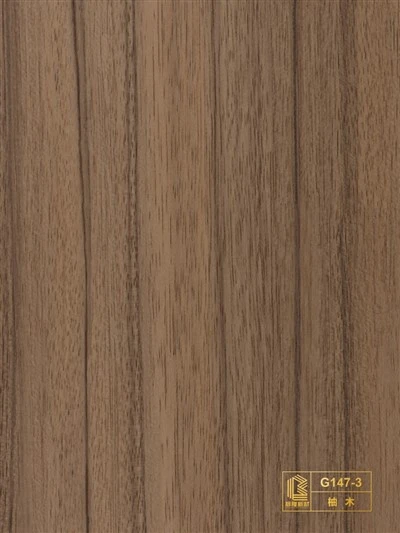
If you’re thinking about using this film for your display cases—whether you’re a custom maker, a retail brand, a museum, whatever—hit us up to chat. We can send you free samples, answer any questions about grades, adhesives, installation, whatever you need. No pushy sales guys, no hidden fees, just real advice from people who actually make this stuff and use it with display case makers every day. Don’t overcomplicate your display case project—reach out, let’s make something that looks good and lasts.
PVC Deco Film References:
- Wood Adhesives: Chemistry and Technology, Vol. 2, 2018, pp. 456-472
- UV Stability of Extruded PVC Films for Interior Applications, Journal of Vinyl and Additive Technology, 2020, Vol. 26, Issue 3, pp. 512-520
- Food Safety Standards for PVC-Based Films, U.S. Food and Drug Administration, 2019
- Curvature Performance of Flexible PVC Laminates for Architectural Surfaces, Journal of Architectural Engineering, 2021, Vol. 27, Issue 2, pp. 1-8
Zhejiang Biaolong New Materials Co., Ltd.
Zhejiang Biaolong New Materials Co., Ltd. is one of the most experienced PVC wood grain film manufacturers and suppliers in China, also supports customized service. We warmly welcome you to buy high quality PVC wood grain film in stock here from our factory. If you have any enquiry about cooperation, please feel free to email us.
Address: No.2 Helai Road, Lianhua Mountain Industrial Park, Jiangshan City
E-mail: Yuspvc@gmail.com
WebSite: https://www.biaolongpvc.com/
