As a supplier of heavy-duty vertical machining centers, I often encounter inquiries from customers about the machine’s capabilities, especially regarding its suitability for machining hardened materials. This topic is of great interest to many in the manufacturing industry, as hardened materials are widely used in various applications, including aerospace, automotive, and tool and die making. In this blog post, I will delve deep into the question: Can a heavy-duty vertical machining center be used for machining hardened materials? Heavy Duty Vertical Machining Center

Understanding Heavy-Duty Vertical Machining Centers
Before we discuss the suitability of heavy-duty vertical machining centers for machining hardened materials, it’s essential to understand what these machines are. A heavy-duty vertical machining center is a powerful and versatile machine tool designed for precision machining of various materials. It features a vertically oriented spindle that allows for efficient and accurate cutting operations. These machines are typically equipped with high-torque motors, rigid structures, and advanced control systems, enabling them to handle large workpieces and perform complex machining tasks.
The main advantages of heavy-duty vertical machining centers include their high productivity, precision, and flexibility. They can handle a wide range of machining operations, such as milling, drilling, boring, and tapping, and can be used in both small-scale and large-scale production environments. Additionally, these machines are often equipped with automatic tool changers, which further enhance their efficiency and productivity by reducing setup times.
Challenges of Machining Hardened Materials
Hardened materials, such as hardened steels, titanium alloys, and nickel-based alloys, pose several challenges when it comes to machining. These materials are characterized by their high hardness, strength, and wear resistance, which make them difficult to cut. Some of the key challenges associated with machining hardened materials include:
- Tool Wear: Hardened materials can cause rapid tool wear, which can lead to reduced tool life, increased machining costs, and poor workpiece quality. This is because the high hardness of the material requires the cutting tool to exert a significant amount of force during machining, which can cause the tool to wear down quickly.
- Heat Generation: Machining hardened materials generates a large amount of heat, which can cause thermal damage to the workpiece and the cutting tool. This can result in premature tool failure, dimensional inaccuracies, and surface finish problems.
- Cutting Forces: The high strength and hardness of hardened materials require the cutting tool to apply high cutting forces during machining. These forces can cause deflections in the workpiece and the machine tool, leading to dimensional inaccuracies and poor surface finish.
Can a Heavy-Duty Vertical Machining Center Overcome These Challenges?
Despite the challenges associated with machining hardened materials, a heavy-duty vertical machining center can be an effective tool for this purpose. Here’s how these machines can overcome the challenges mentioned above:
- Rigid Structure: Heavy-duty vertical machining centers are designed with a rigid structure to withstand the high cutting forces generated during machining of hardened materials. This rigidity helps to minimize deflections in the machine tool and the workpiece, ensuring accurate and precise machining.
- High-Torque Spindle: These machines are equipped with high-torque spindles that can provide the necessary power to cut through hardened materials. The high torque allows the cutting tool to maintain a consistent cutting speed, even when machining difficult-to-cut materials, reducing tool wear and improving machining efficiency.
- Advanced Cooling Systems: To address the issue of heat generation, heavy-duty vertical machining centers are often equipped with advanced cooling systems. These systems help to dissipate the heat generated during machining, preventing thermal damage to the workpiece and the cutting tool.
- Precision Control Systems: The advanced control systems in heavy-duty vertical machining centers allow for precise control of the cutting parameters, such as spindle speed, feed rate, and depth of cut. This precision control helps to optimize the machining process, reducing tool wear and improving workpiece quality.
Case Studies: Successful Machining of Hardened Materials with Heavy-Duty Vertical Machining Centers
To illustrate the effectiveness of heavy-duty vertical machining centers in machining hardened materials, let’s look at a few case studies:
- Aerospace Industry: In the aerospace industry, hardened materials such as titanium alloys are commonly used for manufacturing critical components. A heavy-duty vertical machining center was used to machine a titanium alloy part for an aircraft engine. The machine’s rigid structure and high-torque spindle allowed for efficient and precise machining of the part, while the advanced cooling system helped to prevent thermal damage. The result was a high-quality part that met the strict requirements of the aerospace industry.
- Automotive Industry: In the automotive industry, hardened steels are often used for manufacturing engine components, such as crankshafts and camshafts. A heavy-duty vertical machining center was used to machine a hardened steel crankshaft. The machine’s precision control system allowed for accurate machining of the complex geometries of the crankshaft, while the high-torque spindle and rigid structure ensured efficient cutting and minimized tool wear. The final product met the high standards of the automotive industry in terms of dimensional accuracy and surface finish.
- Tool and Die Making Industry: In the tool and die making industry, hardened materials are used to manufacture molds and dies. A heavy-duty vertical machining center was used to machine a hardened steel mold for plastic injection molding. The machine’s ability to perform high-speed machining operations, combined with its advanced cooling system, allowed for rapid and precise machining of the mold. The result was a high-quality mold that was produced in a shorter time compared to traditional machining methods.
Factors to Consider When Using a Heavy-Duty Vertical Machining Center for Machining Hardened Materials
While heavy-duty vertical machining centers can be used for machining hardened materials, there are several factors that need to be considered to ensure successful machining:
- Cutting Tools: The choice of cutting tools is crucial when machining hardened materials. High-speed steel (HSS) tools are generally not suitable for machining hardened materials due to their low hardness and wear resistance. Instead, carbide tools, ceramic tools, or cubic boron nitride (CBN) tools should be used. These tools offer higher hardness, wear resistance, and heat resistance, making them more suitable for machining hardened materials.
- Cutting Parameters: The cutting parameters, such as spindle speed, feed rate, and depth of cut, need to be carefully selected to optimize the machining process. In general, lower feed rates and depths of cut are recommended when machining hardened materials to reduce tool wear and prevent thermal damage. The spindle speed should be adjusted based on the type of cutting tool and the material being machined.
- Workholding: Proper workholding is essential when machining hardened materials to ensure stability and accuracy. The workpiece should be securely clamped to prevent movement during machining, which can lead to dimensional inaccuracies and poor surface finish. Specialized workholding devices, such as vises, clamps, and fixtures, may be required for machining hardened materials.
Conclusion
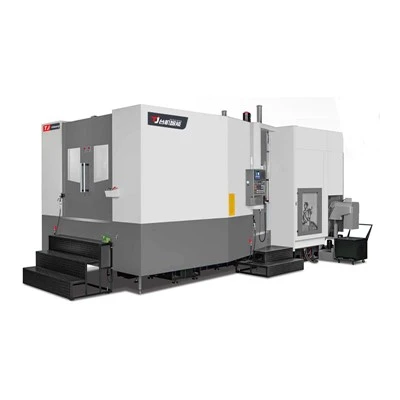
In conclusion, a heavy-duty vertical machining center can be used for machining hardened materials, provided that the machine is properly selected and the machining process is carefully optimized. These machines offer several advantages, such as high productivity, precision, and flexibility, which make them suitable for machining a wide range of hardened materials. However, it’s important to consider the challenges associated with machining hardened materials and take appropriate measures to overcome them. By using the right cutting tools, setting the correct cutting parameters, and ensuring proper workholding, manufacturers can achieve high-quality results when machining hardened materials with a heavy-duty vertical machining center.
Horizontal Machining Centers If you’re interested in learning more about our heavy-duty vertical machining centers and their suitability for machining hardened materials, or if you have any specific requirements for your machining operations, please feel free to contact us. Our team of experts is ready to assist you in finding the best solution for your manufacturing needs.
References
- Tooling U-SME, "Machining Hardened Materials: Best Practices," Tooling U-SME Knowledge Center.
- Sandvik Coromant, "Machining of Hardened Steels," Sandvik Coromant Technical Library.
- Mazak Corporation, "Machining Hardened Materials with Vertical Machining Centers," Mazak Technical Papers.
Guangdong Taiji Intelligent Equipment Co., Ltd.
Address: Room 107, Building 15, No. 911 Jian’an Road, Chang’an Town, Dongguan City, Guangdong Province
E-mail: sale@gdtaijicnc.com
WebSite: https://www.gdtaijicnc.com/
