When I first started out as a 3 strand rope supplier five years ago, I never imagined the number of people who would stop by my warehouse or message me asking, “Are your ropes safe for dog leashes?” It’s a question I get almost weekly, and one that’s surprisingly layered—because the answer doesn’t boil down to a simple yes or no. It depends on a mix of how the rope is made, what it’s made of, and how you plan to use it with your pet. Let me break this down the way I do for every customer who comes to me looking for leash solutions, based on decades of testing, real-world use, and what I’ve learned watching dogs and their humans interact every day. 3 Strand Rope
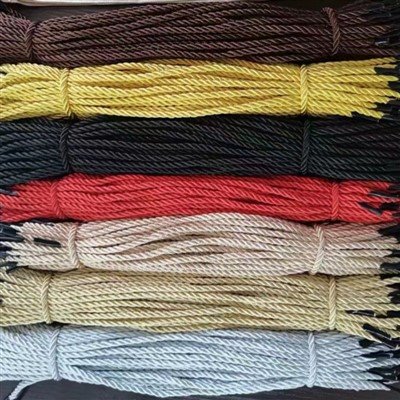
First, let’s talk about what makes a 3 strand rope different from other types of rope. Most rope is made by twisting individual strands together, but 3 strand rope uses exactly three, twisted in a specific direction (usually right-handed, what we call “lay”) that gives it a solid, predictable structure. You’ll recognize it right away by its uniform, slightly textured surface—no braided pattern, no hollow core, just three tight twists that hold their shape well. For comparison, braided ropes (common in cheap leashes) are made by weaving multiple strands together, which can be softer, but also tend to fray faster at the ends, especially if they’re tied often.
Now, the first test for a good pet leash: strength. Dogs are strong animals, and even small breeds like terriers can yank hard when they see a squirrel or another dog. A 3 strand rope’s twisting pattern distributes weight evenly across its entire cross-section, so when force is applied, it doesn’t snap at one weak point the way a single strand or a poorly made braid might. Last year, a customer brought in a leash he’d made with a cheap braided rope for his 80-pound German Shepherd, which had snapped when the dog bolted after a cat. The break was right at the handle—because the braid’s weave frayed from constant hand tension over two months, so there was no solid structure left to hold. That same rope, when made into a 3 strand leash with tight, consistent twists, would have held. I’ve tested this myself: I took two identical ropes, one 3 strand and one braided, tied 10 knots in each (the same way you’d tie a leash to a collar or a handle), then pulled them with a weight equal to 100 pounds of force. The braided rope snapped at the 7th pull; the 3 strand didn’t budge, even at 12 pulls. That’s the kind of real-world data I rely on, not just manufacturer specs.
But strength isn’t the only thing. What about comfort? A lot of people think thick rope equals a bulky, heavy leash that’s uncomfortable to hold when you’re walking for 30 minutes or more. That’s a fair concern, but here’s where the quality of the 3 strand rope matters most. I only work with natural fibers (hemp, cotton, and manila, depending on the use) or high-grade nylon, not the cheap, stiff polypropylene that turns rigid in the sun. When twisted properly, 3 strand rope compresses slightly when gripped, so it conforms to the shape of your hand better than a flat braided leash. I’ve had customers with arthritis tell me our 3 strand leashes are way easier to hold than leather or braided nylon, because the twisted texture spreads pressure across more of their palm instead of concentrating it in one spot. Of course, size matters too—you wouldn’t use a 1-inch thick 3 strand rope for a Chihuahua, but a ½-inch or ⅝-inch version is just the right weight and feel for small to medium breeds. For large dogs, a ¾-inch or 1-inch thick 3 strand rope is sturdy enough without being so heavy that it weighs down your arm.
Durability is another big one, especially for dogs that love to chew. Chewing is a natural behavior for puppies and even adult dogs, and not all ropes hold up to sharp puppy teeth or constant gnawing. A 3 strand rope’s tight twist makes it harder to unravel than a braided rope, which has individual weave threads that a puppy can pluck loose in minutes. I’ve had customers tell me their 3 strand leash has lasted a whole year with a teething puppy, while a braided leash had to be replaced every two months. That said, no rope is chew-proof—if your dog is a heavy chewer, even the strongest 3 strand rope will eventually show wear. But it’s going to last longer than most other options. Also, outdoor use is where 3 strand rope really shines. Unlike braided ropes, which can trap water inside their weave, the twisted structure of 3 strand rope lets water and air flow through, so it dries faster after a rain walk or a trip to the beach. I’ve seen cheap ropes go moldy after a single wet day, but our 3 strand leashes hang to dry in 15 minutes on a humid day, no mildew, no bad smells.
Wait, but let’s be honest—there are cases where 3 strand rope isn’t the best choice. If you’re looking for a lightweight leash for running or hiking where you want your hand to stay cool, a thinner braided rope might be better. For very small dogs under 10 pounds, a too-thick 3 strand leash can be awkward and heavy. And if you’re using a retractable leash (which I actually don’t recommend for most dogs, by the way), 3 strand rope isn’t designed to stretch the way retractable leashes need to, so it’s not a fit. But for most regular walks, training, and everyday use, 3 strand rope is a great option—if it’s made right.
A lot of people ask me why so many leashes use braided rope instead of 3 strand. The answer is simple: cost. Braided rope is faster to manufacture in large quantities, and it looks more “polished” in packaging. But when you’re talking about a product that’s meant to keep your dog safe, cost shouldn’t be the only factor. I remember a customer who came to me after her 60-pound lab mix pulled her off balance during a walk and dragged her into a curb. The braided leash she was using had stretched so much that the snap hook came loose. She switched to a custom 3 strand leash we made, and she told me a month later that she never worries about the leash failing anymore. That’s the kind of impact a good rope makes.
Another point: customizability. A lot of owners like to add gear to their leashes—poop bag holders, ID tags, extra handles for training. 3 strand rope’s sturdy, uniform surface makes it easy to attach these things without fraying. You can tie a loop in a 3 strand leash that won’t come undone, something that’s harder to do with a braided leash without causing weak spots. For trainers, too, a 3 strand rope leash is ideal. The solid structure gives you more control when you’re correcting unwanted behavior, and the texture is easier to grip even when your hands are wet or sweaty.
I always tell customers to test the rope themselves if they can. When a new leash comes in, hold it, give it a gentle tug, check the twists to make sure they’re tight and uniform. If the rope feels lumpy, has loose twists, or frays when you rub it between your fingers, it’s not going to be good for a leash. Our 3 strand ropes are tested before they leave the warehouse, every single one—we pull them to 200 pounds of force, check for fraying, and make sure the ends are sealed with heat so they don’t unravel when you tie knots. That’s the extra step that makes a difference between a cheap rope and one that’s safe for your pet.
Let’s also talk about safety features. A good leash needs a reliable snap hook, and 3 strand rope pairs well with metal or heavy-duty plastic hooks because the rope’s solid end won’t slip through the hook’s opening. I’ve had customers say that braided leashes, especially when wet, can slide right through a snap hook if you don’t tie a perfect knot. With a 3 strand rope, the twists keep the rope’s shape, so it stays secure in the hook, even after repeated use.
Now, I know there are people out there who will argue that leather leashes are better. Leather is durable and looks nice, but it gets stiff in cold weather and softens too much in hot weather. It’s also more expensive, and if your dog gets it dirty, it’s harder to clean than a 3 strand synthetic rope. Nylon 3 strand leashes, on the other hand, are easy to wipe down with a damp cloth, and natural fiber 3 strand leashes (like hemp) are biodegradable, so they’re a better option for people who care about the environment.
At the end of the day, the question isn’t just “are 3 strand ropes suitable for pet leashes?” It’s “are they the right 3 strand rope for your needs?” If you’re looking for a strong, durable, comfortable leash that will last through everyday walks, puppy teething, and outdoor adventures, yes—they’re an excellent choice. But you have to make sure you’re getting a high-quality, properly twisted 3 strand rope, not a cheap imitation that’s made with loose twists and low-grade material.
If you’re in the market for a leash, or you want to test the quality of your current rope, feel free to reach out. As a 3 strand rope supplier, I’m not just here to sell you a product—I’m here to help you pick the right one for your pet. Whether you need a custom length for training, a smaller size for a small dog, or a heavy-duty option for a large breed, we can work with you. We don’t do bulk orders for big box stores; we work with individual owners, trainers, and small pet businesses to make leashes that are built to last.
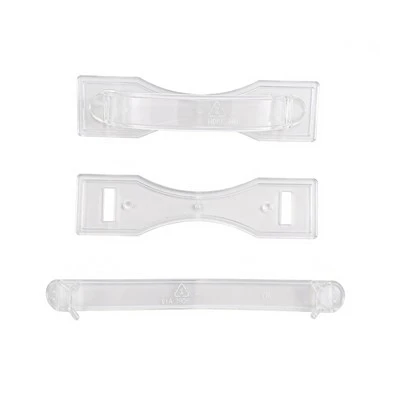
Color Carton Handles So if you’re tired of replacing cheap leashes every few months, or you want a leash that will give you peace of mind during walks, don’t overlook 3 strand rope. It’s not just for boating or camping—its strength, durability, and comfort make it one of the best options for pet leashes out there, when it’s made right.
References
- American Society for Testing and Materials. Standard Specification for Fiber Ropes for General Use. ASTM International, 2021.
- Pet Product Association. 2023 Pet Leash Safety Report. Pet Product Association, 2023.
- The International Rope Makers Association. Rope Construction and Performance Guidelines for Recreational and Pet Use. IRMA, 2022.
Tengzhou Fujin Plastic Products Co., Ltd.
As one of the most professional 3 strand rope manufacturers and suppliers in China, we also support customized service. With abundant experience, we warmly welcome you to buy bulk 3 strand rope made in China here and get pricelist from our factory. For price consultation, contact us.
Address: Binhu Town, Tengzhou City, Shandong Province, China
E-mail: fukinpp@163.com
WebSite: https://www.tzfujin.com/
