Hey everyone, thanks for hanging out with me today! I’m Jake, been working in the fluid film bearings game for almost a decade now, and let me tell you—one question I get from customers all the time is: “What actually makes a high-speed fluid film bearing hold up?” Like, when you’re spinning a turbine, a compressor, or even that big conveyor system at a manufacturing plant at 10,000 RPM or more, skimping on bearing specs? That’s a one-way ticket to downtime town, and no one wants to be stuck there. Today I’m breaking down the real, non-fluff performance requirements we live by at my shop when we build these things, and why cutting corners on any of these means we’re not doing our jobs right. Fluid Film Bearings

First off, let’s get one thing straight—high-speed fluid film bearings aren’t your grandpa’s plain bearings that just slide on metal. We’re talking about hydrodynamic or hydrostatic designs here, right? The ones that create that thin layer of fluid (usually oil, sometimes air even) between the shaft and the bearing so there’s zero metal-on-metal contact. That’s the magic part, but to make that magic work when you’re spinning fast, a bunch of boxes need to get checked. Let’s start with the big one: fluid film thickness and stability under high rotational speeds. This is non-negotiable. When your shaft is spinning super fast, centrifugal force wants to push the fluid away from the gap between the shaft and bearing, right? If the film is too thin, two things happen fast: first, it breaks down entirely—metal touches metal, you get scoring, maybe even a seized shaft in minutes. Second, even a tiny bit of surface roughness on either part will poke through that thin film, cause wear, and before you know it, you’re replacing a bearing that should’ve lasted years.
Wait, I know what some of you are thinking—“Just make the gap bigger?” Nah, that’s not the fix. A wider gap means more fluid leakage, more power wasted pumping that fluid, and actually, the film gets less stable at high speeds. We shoot for a film thickness that’s just enough to cover the surface roughness of both the shaft and bearing. For high-speed setups, that usually means 10 to 50 microns, depending on the application. But here’s the catch—this thickness can’t be static. When speeds change, like if a turbine ramps up from idle to full load in 30 seconds, that film has to adapt fast. If it doesn’t, you get what’s called “half-speed whirl” or “oil whirl” — those are the vibrations that sound like a tea kettle screaming, that shake the whole machine, and can destroy components way faster than normal wear. We test all our designs with dynamic modeling to make sure that film thickness doesn’t dip below that critical threshold even during speed transients. No exceptions.
Next up: load capacity. High speed doesn’t mean light load, either. A lot of industrial applications that run at high RPM—like gas turbines, centrifugal pumps, or even spindle bearings for machine tools—are carrying heavy radial or axial loads, and the forces on the bearing go up with the square of speed. Wait, let me explain that simply: if you spin a shaft at 2,000 RPM, the load on the bearing is X, spin it at 4,000 RPM, that load is 4X. That’s a huge jump no one talks about enough. So the bearing’s load capacity isn’t just about holding weight—it’s about handling those dynamic, speed-amplified forces without the film collapsing. Hydrostatic bearings have an edge here because they use external fluid pressure to maintain the film even at low speeds, which is great for applications that start/stop a lot and run at high speed, but hydrodynamic ones (which use the shaft’s own rotation to pull fluid in) need to be designed with deeper pockets in the bearing—like recesses or grooves that trap fluid and boost load capacity at speed. We always match the bearing’s load rating exactly to the application’s maximum dynamic load, not just the static load at idle. That’s a mistake a lot of smaller shops make, and it costs their customers big time.
Then there’s thermal management. This is probably the most underrated performance requirement, honestly. When you have two surfaces moving against each other fast, even with a fluid film, there’s friction, and friction makes heat. At high speeds, that heat can build up super quick—if it’s not dissipated, the fluid viscosity drops, right? Viscosity is just how thick the fluid is—like honey vs. water. If the oil gets too hot, it thins out, and that thin film we talked about earlier breaks. Worse, the bearing and shaft can expand differently because of the heat. The shaft might expand more than the bearing, or vice versa, which narrows that gap even more—perfect recipe for metal contact.
How do we handle this? First, we pick the right fluid. For most industrial high-speed bearings, we use synthetic oils instead of mineral oils because they hold their viscosity way better at high temps. We also design the bearing with cooling channels—small, machined grooves that let cooling fluid (sometimes the same process fluid, sometimes separate coolant) flow through the bearing housing to pull heat away. We also size the bearing’s surface area correctly—more surface area means more heat can escape to the housing, which then transfers it to the external cooling system. Last year, we had a customer with a centrifugal compressor that was overheating their original bearings, burning oil every 3 months. We reworked the bearing with a larger cooling channel and switched to a synthetic oil with higher viscosity index, and they’ve gone 18 months without an oil change. That’s the stuff that matters.
Vibration and dynamic stability are next. I touched on oil whirl earlier, but that’s just one part. High-speed machines are sensitive—any imbalance in the shaft, any misalignment, or any bearing imperfection can turn into a huge vibration that not only breaks the bearing but damages the whole machine. For fluid film bearings, stability means they can handle those small imbalances and external forces without developing resonant vibrations that spiral out of control. How do we nail this? We optimize the bearing’s groove design, the length-to-diameter ratio (L/D)—a lot of people don’t know this, but for high speed, a lower L/D ratio (like 0.5 to 0.8, instead of the 1.0 or higher you see in slower machines) is better because it reduces the “springiness” of the fluid film that causes vibration. We also balance the bearing’s own components to within G2.5 or better—way stricter than standard rotating parts—so there’s no tiny imbalance in the bearing itself that amplifies vibration at high RPM. We use advanced vibration testing in our facility, too—when a customer sends us their specs, we run full-speed tests on a mock shaft setup to make sure the bearing doesn’t hit any resonant frequencies up to 150% of their operating speed. That way, we avoid surprises once it’s installed on their machine.
Wait, let’s not forget about wear resistance and material compatibility. Even with a perfect fluid film, if the bearing material is garbage, it’s going to wear out fast. High-speed bearings need materials that are hard enough to resist scoring if the film ever breaks for a split second, but soft enough (or have enough lubricity) so if there’s contact, it doesn’t seize to the shaft. A lot of our high-speed bearings use babbitt lining—tin-based or lead-based babbitt, which is super malleable, so if there’s a tiny bit of contact, it just deforms instead of welding to the steel shaft. For applications where the fluid is corrosive, like food and beverage processing or chemical pumps, we use overplated babbitt or even aluminum alloy linings that resist corrosion. We also match the material of the bearing to the shaft’s material—if the shaft is hardened steel, we use a babbitt with a higher tin content for better compatibility, instead of a cheaper one that would wear the shaft down over time. No one wants a $10,000 shaft replacement because a $500 bearing used the wrong material.
Another big one that’s often overlooked: leakage and power loss. Yeah, I know, this sounds more like a side thing, but for large-scale industrial applications, every watt of power wasted on pumping fluid or overcoming friction adds up to thousands of dollars a year. High-speed fluid film bearings need to balance being leak-free enough to not waste fluid, but not so tight that they create too much drag. We optimize the bearing’s end seals—using low-friction lip seals or labyrinth seals, depending on the application—to cut down on leakage without adding extra friction. For example, air bearings (those are high-speed bearings that use air instead of oil) need super tight seals, but oil bearings can have a tiny, controlled leakage that actually helps keep the film fresh and removes heat. We run CFD (computational fluid dynamics) simulations on every design to calculate exactly how much fluid is going to leak, how much power it’s going to take to pump that fluid, and make sure it’s within the customer’s operating budget. Last quarter, a power plant customer was complaining that their bearings were adding 2% extra power to their turbine’s load—we reworked the bearing’s seal design and optimized the groove layout, cut the power loss by 1.2%, which saved them over $40,000 a year in electricity. That’s the value of getting these specs right.
Wait, let’s talk about operating environment too. Because high speed doesn’t happen in a vacuum. Some bearings run in environments with extreme temperatures—like aerospace turbines that go from -40F at high altitude to 1,000F at full power. Some run in dirty environments, like mining conveyor systems where dust and debris can get into the bearing housing. We have to adjust all the above specs to fit that. For extreme cold, we use fluids that don’t get too thick, like synthetic ester oils, and make sure the bearing’s gap doesn’t get too wide when it’s cold, because fluid will be less viscous at low temps. For dirty environments, we add extra filtration ports in the bearing housing so the fluid can be filtered more often, and we use seals that are resistant to dust and abrasive particles. That’s why we don’t do one-size-fits-all bearings—every application is different, so we tailor every spec to the customer’s exact setup.
I think the biggest takeaway here is that high-speed fluid film bearings aren’t just about “holding a shaft” — they’re a precision component that has to work with three different systems: the rotating shaft, the fluid that forms the film, and the machine’s cooling and control systems. Miss one small spec, and you’ve got downtime, repairs, lost production. That’s why we spend so much time testing every design, not just pulling a spec sheet off the shelf.
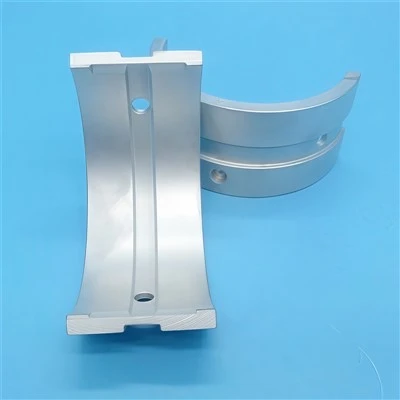
If you’re working on a high-speed application—whether it’s a new turbine, a compressor, a machine tool spindle, or any equipment that runs over 5,000 RPM and needs reliable, low-maintenance bearings—don’t guess on your specs. We’ve done hundreds of these setups, and we can help you avoid the mistakes that lead to costly failures. Hit us up to talk through your project, no pressure, just honest advice on what your bearing actually needs to perform at high speed. Don’t wait until you’re replacing bearings every 6 months—get it right the first time.
Thin Walled Babbitt Bearings References:
- Stachowiak, G.W., Batchelor, A.W. Engineering Tribology, 4th Edition. Elsevier, 2014.
- Cameron, A. Principles of Lubrication. Longman, 1976.
- Rohatgi, P.K. Tribology of High Speed Bearings. CRC Press, 1998.
- Bloch, H.P. Fluid Film Bearings: Selection, Operation, and Maintenance. Fairmont Press, 2006.
- Taylor, C.M. Vibration and Stability of Fluid Film Bearings. Journal of Tribology, Vol. 112, No. 2, 1990.
Wenzhou Zhengbang Bearing Co., Ltd.
We are one of the most professional fluid film bearings manufacturers and suppliers in China. With abundant experience, we warmly welcome you to buy customized fluid film bearings at competitive price from our factory. If you have any enquiry about free sample, please feel free to email us.
Address: Units 1-1 and 3-1, Building 12, Yongxing Nanyuan Small and Micro Enterprise Startup Park, Binhai 2nd Road, Yongxing Subdistrict, Longwan District, Wenzhou City, Zhejiang Province.
E-mail: zbbearing@zbbearing.com
WebSite: https://www.zb-bearings.com/
