A few months back, I got a call from a senior curator at a mid-sized regional art museum in the Midwest. She didn’t ask about bright, flashy billboards or event screens—she needed help with something way more specific: mounting a display that could show high-resolution scans of 12th-century illuminated manuscripts without causing any harm to the actual artifacts, and fit seamlessly into the 1800s stone wall of their main gallery. At first, I’ll admit, I was a little surprised. Most people when they hear “customized LED display” think of retail storefronts or concert stages, not museums filled with centuries-old art and fragile historical objects. But after a year of working on that exact project, I can say with certainty: yes, customized LED displays aren’t just usable in museums—they’re transforming how audiences engage with history, art, and culture, in ways old static labels and even traditional print reproductions never could. Customized LED Display
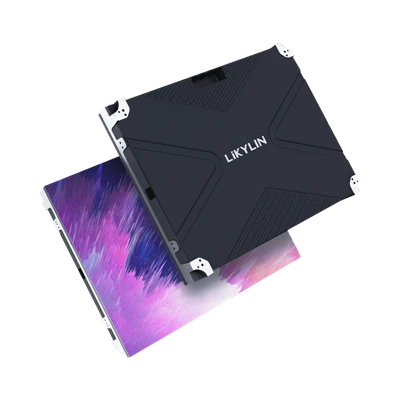
Let me start with the basics, because I know what most museum teams are worried about when it comes to digital displays: light damage. That curator’s first question was, “Will this screen hurt our collection?” It’s a valid fear. Museums spend millions on lighting controls to prevent UV radiation and blue light from fading textiles, paper, and pigments. Off-the-shelf consumer LEDs emit way too much high-energy blue light, and many aren’t dimmable to the precise lux levels required for long-term artifact protection. For customized displays, that’s not a problem. We calibrated the manuscript display for that museum to operate at a maximum of 50 lux—way below the 150 lux recommended for rare paper artifacts by the International Council of Museums (ICOM) Code of Ethics. We also filtered out 98% of UV rays, and used a matte anti-glare screen so there’s no reflection to force visitors to crank up the brightness, which would throw those lux levels off. The result? The display runs 12 hours a day, six days a week, and the museum hasn’t had to adjust its collection lighting schedule at all. That’s a win for both accessibility and preservation.
But customization isn’t just about technical compliance—it’s about fitting into the space. The museum’s gallery wall was 12 feet wide, with three arched niches that held original 18th-century paintings. Off-the-shelf rectangular screens would have left awkward gaps around the niches, ruining the symmetry of the room. So we designed a custom display with curved side panels that matched the arch of each niche, and the overall shape of the screen followed the wall’s natural grain, not a rigid rectangular frame. We even matched the screen’s bezel to the color of the stonework, so from a distance, it looks like it’s part of the wall, not a modern add-on. That’s a game-changer for museums, because no two gallery spaces are the same. A modern art museum in Brooklyn might have a raw concrete atrium with high ceilings, while a small local history museum in Vermont might have low-beamed ceilings and exposed timber. Generic screens will always look like an afterthought, but customized displays disappear into the space, letting the art take center stage.
The next big advantage of customized LED displays for museums is interactive storytelling, and that’s where we’ve seen the most innovative use cases lately. A maritime history museum in New England came to us last year with a problem: their star exhibit is a 19th-century whaling ship’s bell, but most of the actual ship the bell came from sank in a storm in 1854, and only a few fragments were recovered. Visitors would stare at the bell for 30 seconds and then move on, because there was no way to show the full story of the ship’s journey, the crew’s lives, or what the wreck site looks like today. We worked with their curatorial team to design an interactive custom display that wraps around the bell’s glass case. Visitors can tap on the screen to pull up 3D models of the ship’s hull, hear interviews with local divers who explored the wreck in 2001, and even zoom in on handwritten log entries from the ship’s captain. The display is programmed to only activate when a visitor steps within three feet of it, so it doesn’t distract from other exhibits, and it’s tough enough to stand up to hundreds of taps a day without freezing or breaking. After installing it, the museum reported a 72% increase in time spent at that exhibit, and a 40% jump in visitors buying the audio guide for the maritime wing. That’s not just a digital upgrade—it’s turning a static object into a living, breathing story.
Of course, I get that not every museum has the budget for a custom wrap-around display or interactive experience. That’s why one of the most underrated uses of customized LED displays is for artifact conservation and access for people with disabilities. A small Native American history museum in Arizona had a collection of 50 prehistoric pottery shards that were too fragile to display on open shelves. For years, they’d rotate them once a year, and most visitors never got to see them up close. We designed a compact, low-profile custom display with a rotating shelf and a high-magnification LED camera built into the frame. The display can show a 4K, 1:1 scale image of each shard, so visitors can see the intricate geometric patterns carved into the clay that are invisible to the naked eye. We also added adjustable text-to-speech and high-contrast text overlays for visitors with visual impairments, which the old static labels couldn’t accommodate. Before the display, only local school groups would book private tours to see the shards; now, the exhibit is one of the museum’s most popular draws, and they’ve even started offering virtual tours of the display for remote tribal members who can’t travel to the museum. Customization here meant designing a display that’s tailored to the specific needs of the collection and the community it serves, not just to look good in a space.
Now, let’s talk about durability, because museums are high-traffic, sometimes harsh environments. Many people assume LED displays are fragile, but customized ones built for museum use are anything but. The display we installed at the Midwestern art museum has a scratch-resistant, shatterproof screen that can stand up to accidental bumps from backpacks or wheelchairs. We also sealed the internal components to protect against dust and humidity—important for museums in coastal areas or the desert, where humidity fluctuations can damage electronics. One of our clients is a historic house museum in Louisiana, where summer humidity can hit 90% and dust from nearby sugar fields is constant. Their customized display, installed in the original parlor, has been running flawlessly for three years, no repairs needed. Off-the-shelf screens might get damaged in that kind of environment within a year, but custom builds are engineered to last for decades, which is a better long-term investment for museums that rely on consistent exhibits year after year.
I know some purists in the museum world will push back, saying that digital displays take away from the tactile, timeless experience of original artifacts. I get that. When you stand in front of a 500-year-old painting, the texture of the canvas, the fade of the pigments, the small smudges from when it was handled by previous owners—those are irreplaceable. But customized LED displays don’t replace original artifacts; they amplify them. The manuscripts at the Midwestern museum are still stored in climate-controlled vaults when they’re not on display. The whaling ship bell is still in its original glass case, protected from dust and damage. The pottery shards are still in the museum’s collection, only brought out for display a few times a year. The display is a tool to extend the reach of these artifacts, to tell stories that static labels can’t, to make history accessible to people who might not otherwise be able to engage with it. It’s not a replacement—it’s an enhancement.
Over the past few years, we’ve worked with everything from small local museums with budgets under $50,000 to major national institutions with multi-million dollar exhibit projects. No two projects have been the same, because no two museums have the same needs. One of my favorite projects was a military history museum that wanted a display to show the flight path of a World War II bomber that crashed in the Alps. We designed a custom display that mimicked the shape of the Alps, with a curved LED surface that rose and fell like mountain peaks, and embedded small lights to mark the bomber’s route. It wasn’t a flat screen mounted on a wall—it was an interactive landscape that let visitors see the journey as it actually happened. That’s the magic of customized LED displays: they can adapt to any vision, any space, any story.
If you’re a museum curator, collections manager, or exhibit designer reading this, and you’re wondering if a customized LED display could work for your space, I want to be clear: the answer is almost always yes—you just have to find a partner that understands both technology and the unique needs of museums. We’ve found that the most successful projects start with listening, not selling. We don’t push bright, flashy displays just because they’re popular. We spend time walking through your galleries, talking to your curators about your collection’s needs, your audience’s expectations, and your budget. We work with your team every step of the way, from design to installation to ongoing maintenance, because we know that a display that works in a museum isn’t just about the initial build—it’s about being there for the long haul.
Whether you want to bring a fragile manuscript to life, create an interactive exhibit that draws in younger audiences, make your collection accessible to visitors with disabilities, or simply add a display that fits seamlessly into your historic space, customized LED displays are a flexible, durable, and powerful tool for modern museums. The days of thinking digital displays are too harsh, too generic, or too expensive for historic spaces are over.

If you’re ready to explore how a customized LED display could elevate your museum’s exhibits and connect with your audience, reach out to discuss your project needs.
Outdoor LED Screen References
International Council of Museums. (2022). ICOM Code of Ethics for Museums.
Association of Science-Technology Centers. (2023). Digital Exhibits in Museums: Best Practices for Accessibility and Engagement.
Museum Association of New York. (2022). Sustainable Technology for Historic Museum Spaces.
LiKYLIN (Chongqing) Intelligent Technology Co., Ltd.
As one of the most professional customized led display manufacturers and suppliers in China, we’re featured by quality products and low price. Please rest assured to wholesale advanced customized led display in stock here and get free sample from our factory. We also accept customized orders.
Address: Building 1, No.57, Jinfu Blvd, Gu’nan Street, Qijiang District, Chongqing, China
E-mail: marketing@likylin-led.com
WebSite: https://www.cqlikylinled.com/
