If you’ve spent any time around the power lithium battery industry, you’ve heard the same question a hundred times: can this technology, long reserved for electric cars and grid energy storage, actually work for railways? As someone who’s spent the last 12 years sourcing, testing, and delivering lithium battery systems for heavy-duty commercial equipment—including rail—this isn’t just a hypothetical for me. It’s a question that comes up every month when rail operators, maintenance managers, and rolling stock engineers reach out, trying to weigh the long-term costs and reliability of their power systems. For years, lead-acid and diesel gensets were the default for rail applications, but as regulations tighten, operational costs climb, and sustainability becomes non-negotiable, lithium power is no longer a niche upgrade. It’s already changing the industry—if you know what to look for, and who to partner with to get it right. Power Lithium Battery
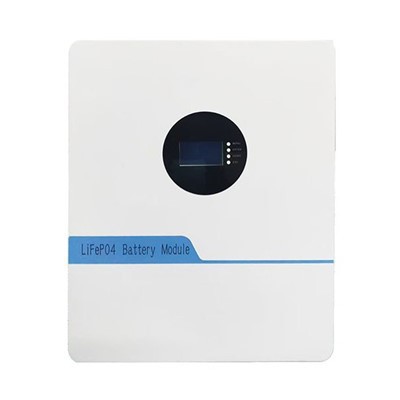
Let’s start with the basics: rail applications have very specific power demands that set them apart from passenger cars or even delivery vans. A commuter train running through mountainous terrain needs to pull 200+ tons up steep grades, so its power system can’t just hold a charge—it has to deliver consistent, high bursts of power without dropping off mid-run. Freight locomotives idle for hours between routes, so their batteries need to hold a charge for weeks, not just a single drive cycle. Maintenance-of-way (MOW) equipment, like track tampers and crane trucks, sits idle most of the week but needs to kick into full operation at a moment’s notice. For these use cases, lithium batteries don’t just stack up against legacy technology—they solve problems that lead-acid and even nickel-metal hydride (NiMH) systems can’t.
First, there’s energy density. A standard lead-acid battery for a commuter train weighs roughly 2,200 pounds and stores about 40 kWh of energy. That same 40 kWh from a power lithium system weighs roughly 500 pounds. For rail, where every pound adds stress to the tracks, reduces load capacity for passengers or freight, and increases wear on the entire vehicle’s frame and brakes, that weight savings is massive. A MOW truck that runs all day on electric power instead of a diesel genset uses half the fuel, produces zero emissions in the yard, and doesn’t need a 1,500-pound fuel tank taking up valuable space. For passenger trains, that weight savings translates directly to more seats, better passenger comfort, and lower operational costs over the lifecycle of the vehicle.
Then there’s cycle life. A good deep-cycle lead-acid battery lasts about 500 full charge-discharge cycles before its capacity drops below 80%—the threshold most manufacturers consider “end of useful life.” A power lithium battery, by contrast, lasts 2,000 to 6,000 cycles, depending on the chemistry and how it’s maintained. For a commuter train that runs daily, 500 cycles is less than two years of operation. That means lead-acid batteries would need to be replaced every two years, at a cost of $15,000 to $25,000 per train set, plus the labor and downtime to swap them out. A lithium system? You’re looking at a 10 to 15 year lifespan, no mid-cycle swaps, just scheduled maintenance that takes an hour instead of a full workday. For a freight locomotive that runs 5,000 miles a week, that difference adds up to millions of dollars in saved costs over 20 years.
But let’s be honest—there was a time when lithium batteries were written off for heavy rail applications, and for good reason. Early lithium-ion systems had issues with thermal runaway, a risk that’s amplified in enclosed, high-heat engine bays where rail equipment often operates. Some operators still remember the 2010s reports of electric buses catching fire, and they’re right to be cautious. But that’s why partnering with a supplier that understands rail-specific requirements is non-negotiable. The power lithium systems we design for rail applications use lithium iron phosphate (LFP) chemistry, not the cobalt-based cells used in most consumer electric cars. LFP cells have a higher thermal stability—they don’t catch fire when punctured, overcharged, or exposed to extreme heat, making them far safer for use in enclosed, high-demand rail environments. We also integrate active thermal management systems that monitor cell temperature in real time, adjusting cooling or heating to keep the system within its optimal 20 to 40 degree Celsius range, no matter if the train is running through a desert in Arizona or a snowstorm in Northern Europe.
Another common concern for rail operators is reliability in extreme conditions. A train in Norway might run at -20 degrees Fahrenheit in the winter, while a unit in India operates at 105 degrees Fahrenheit in the summer. Lead-acid batteries lose 30% of their capacity at temperatures below 32 degrees Fahrenheit, and that drops to 50% at -4 degrees. Lithium systems? Our LFP batteries maintain 90% of their capacity even at -22 degrees, and they handle high heat far better than legacy tech. We test every system we deliver in our climate chambers, simulating everything from Arctic winters to monsoon seasons, to make sure it will perform when the operator needs it most—no mid-trip breakdowns, no stranded passengers, no delayed freight.
Where lithium power is really starting to take hold, though, is in hybrid and fully electric rail fleets. A lot of regional rail operators are adding battery-powered trains as a cheaper alternative to extending electrified lines, which can cost $10 million to $20 million per mile. A battery-electric multiple unit (BEMU) powered by lithium can run 50 to 100 miles on a single charge, enough to cover most regional routes without overhead catenary lines. In Germany, for example, a fleet of Alstom BEMUs powered by LFP batteries has been running on non-electrified lines since 2018, cutting emissions by 90% compared to diesel trains and reducing operational costs by 40% per mile. In the U.S., the state of California has ordered 22 BEMUs for its commuter rail lines, citing lithium’s ability to handle the steep grades and frequent stops along coastal routes.
Even short-line rail, the small networks that connect freight yards to rural distribution centers, is making the switch. Many of these lines used to rely on small diesel locomotives that idle 12 hours a day just to move 10 or 20 cars. A lithium-powered switcher locomotive can run on battery power for 16 hours, idles only when moving, and produces zero emissions in the yard—a huge win for local communities that have complained about diesel fumes for decades. We recently delivered a 200 kWh lithium system to a short-line operator in Ohio that used to spend $12,000 a month on diesel for its switcher. Six months after installation, that number dropped to $1,800 a month, with zero breakdowns and no mid-shift refueling.
But here’s the thing: lithium batteries aren’t a one-size-fits-all solution for rail, and that’s why it’s so important to work with a supplier that gets the unique needs of rail operators. A system that works for a passenger commuter train is not the same as one that works for a freight locomotive or a MOW crane. You can’t just pull a battery design meant for a Tesla and drop it into a 100-ton locomotive—you need to build in redundant monitoring systems, heavy-duty mounting points that can handle the constant vibration of rail travel, and communication protocols that integrate with the train’s existing control systems. We don’t sell off-the-shelf batteries; we design systems tailored to each customer’s route, load requirements, and operational schedule. For a MOW truck that only runs 8 hours a day, we size the system to run the crane and tools without overloading it, so they don’t pay for extra capacity they’ll never use. For a long-haul freight locomotive, we integrate fast-charging capability that lets them top up during scheduled stops, so they don’t need to plug in overnight.
There’s also the issue of lifecycle sustainability, which is a big driver for many rail operators right now. Governments around the world are implementing strict emissions regulations—California’s Advanced Clean Rail rule requires 100% of new rail equipment sold in the state to be zero-emission by 2035, while the EU’s Railway Strategy calls for a 75% reduction in rail emissions by 2050. Lithium systems help operators meet these targets, but they also have a lower carbon footprint than diesel or lead-acid over their full lifecycle. A lead-acid battery has a cradle-to-grave carbon footprint of roughly 110 kg CO2 per kWh, while a new LFP battery is around 70 kg CO2 per kWh, and that number drops to less than 10 kg when the battery is made with recycled material. We take end-of-life seriously too—we have a take-back program for all lithium rail systems we deliver, and we partner with specialized recyclers that recover 95% of the materials in the battery, including lithium, iron, and copper, to make new batteries. That means no waste going to landfills, and a circular supply chain that keeps costs low for operators over time.
Of course, there are still hurdles to widespread adoption. Upfront cost is the biggest one—lithium systems are still 20 to 30% more expensive than lead-acid, though that gap has narrowed dramatically in the last five years as battery prices have dropped by 80%. But when you factor in the savings on fuel, maintenance, and replacement, the total cost of ownership (TCO) for a lithium system is 40 to 60% lower than lead-acid over 10 years. For a rail operator, that’s not just a good deal—it’s a way to stay competitive in a market where everyone is looking to cut costs without sacrificing reliability.
Another hurdle is interoperability. Not all rail networks use the same control systems, and many operators are hesitant to switch to a new power technology that requires specialized maintenance. That’s why we work with our customers to train their maintenance teams, provide 24/7 remote monitoring of their battery systems, and build our technology to integrate with all major rail control protocols, from ETCS to PTC. We also keep spare parts on hand at our regional warehouses, so if an issue does come up, we can ship a replacement component within 24 hours, no downtime for the operator.
For me, the biggest takeaway from the last 12 years working on power lithium batteries is this: the technology isn’t just viable for rail applications—it’s the future. Every time we deliver a system to an operator that’s been using lead-acid for decades, and they call us a year later to say they haven’t had a single breakdown, and their fuel bills are half what they used to be, that’s when you know this is the right move. Rail is one of the most efficient ways to move people and goods, but it’s been held back for too long by outdated power technology. Lithium power isn’t just a upgrade—it’s the key to making rail even more efficient, more sustainable, and more reliable for the next 50 years.

If you’re a rail operator, maintenance manager, or rolling stock engineer looking to make the switch to lithium power, I’ve spent years refining systems specifically for rail use cases, and we’re ready to help you design, test, and install a solution that fits your exact needs. Reach out to us to discuss your fleet requirements, review performance data from our existing rail clients, and get a customized quote that includes a full breakdown of lifecycle costs. The future of rail is electric, and lithium power is leading the way—let’s build it together.
Commercial and Industrial Energy Storage System References
- International Union of Railways. (2022). Battery Electric Rail Vehicles: Global Market and Technology Trends. UIC Publishing.
- Battery University. (2023). Lithium Iron Phosphate Batteries for Heavy-Duty Transportation. Cadex Electronics Inc.
- California Air Resources Board. (2021). Advanced Clean Rail Fleet Regulation: Emissions Reduction and Zero-Emission Requirements. CARB Staff Report.
- Federal Railroad Administration. (2022). Hybrid and Battery-Electric Locomotives: Performance Testing and Operational Benefits. FRA Office of Research and Development.
- Alstom. (2020). Coradia iLint Battery-Electric Train: 5 Years of Commercial Operation. Alstom Transportation Press Release.
- European Environment Agency. (2023). Life Cycle Greenhouse Gas Emissions of Rail Power Systems. EEA Report No 10/2023.
- Railway Gazette International. (2023). Short-Line Rail Operators Lead Battery Power Adoption in North America. Railway Gazette News.
Shandong Yaoqian Energy Storage International Trade Co., Ltd.
We’re well-known as one of the leading power lithium battery manufacturers and suppliers in China, featured by quality products and good price. Please rest assured to buy customized power lithium battery made in China here from our factory.
Address: Lithium Battery Industrial Park, Xingcheng Street, Zaozhuang High-tech Zone, Shandong Province, China
E-mail: boss@yaoqiansmart.com
WebSite: https://www.yaoqiansmart.com/
