What’s up, truckers, fleet managers, and anyone who’s ever stared at a fuel receipt and thought, “There’s gotta be a better way”? Let’s cut to the chase—fuel costs are the biggest headache when you’re running a refrigerated truck, right? You’re not just hauling cargo; you’re keeping it frozen or fresh, which means your whole rig is working overtime. Lately, I’ve been getting so many questions from folks asking about FRP refrigerated truck body panels and how they actually affect fuel efficiency. I’m the owner of a FRP refrigerated truck body panels supplier, and I’ve spent years geeking out over this stuff, so let’s break it down like we’re chatting over a coffee (or a energy drink, no judgment if it’s 5 a.m.). FRP Refrigerated Truck Body Panels
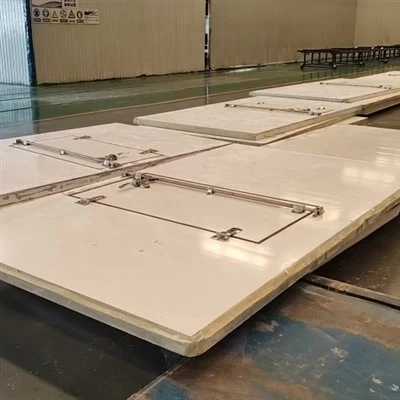
First, let’s get on the same page: FRP stands for Fiber Reinforced Polymer, and these panels are the backbone of a refrigerated truck’s box. They’re not just some random plastic—they’re a mix of fibers (usually glass) and a polymer resin that’s super tough, but way lighter than the old-school stuff we used to use, like aluminum or steel. I know, I know—you’ve heard “lighter = better fuel” a million times, but there’s actual science behind it, not just trucker hype. Let’s start with the big one: weight.
Fuel efficiency boils down to this: the more weight your rig has to pull (or push, if you’re pulling a trailer), the more fuel it uses. It’s basic physics, but let’s make it real. A standard refrigerated truck body made of steel can weigh 3,000+ pounds more than one with FRP panels. Let’s do a quick math check—say you drive 100,000 miles a year at an average of 6 mpg (which is pretty standard for a big rig). If you drop 3,000 pounds of weight, studies show you could bump your fuel economy by 0.5 to 1 mpg. Wait, that might sound small, but let’s translate that to dollars. Diesel averages around $3.50 a gallon these days. 100,000 miles / 6 mpg = ~16,666 gallons a year. At $3.50, that’s $58,333. A 0.75 mpg jump would cut that to ~13,333 gallons, saving you $11,665. That’s no chump change—you could buy a new reefer unit, or a whole set of tires, or take your family on a nice vacation. I’ve seen guys who switched to FRP save that much, and they’re shocked at how fast it adds up.
But weight isn’t the only thing. Aerodynamics is huge for fuel efficiency, especially at highway speeds. Let’s think about old truck bodies—steel and aluminum panels are thick, right? They have sharp edges, rivets sticking out, and those ugly gaps between panels that mess with airflow. FRP panels are different. We can mold them to be super smooth, with curved edges that don’t catch wind like a brick. We’re not talking race-car-level aerodynamics, but even a 5% reduction in drag can translate to another 0.25 mpg. I worked with a fleet in Texas last year that was hauling perishables cross-country. They swapped their steel reefer boxes for FRP, and their driver said “it feels like the truck is gliding instead of fighting the wind.” They ended up saving almost $15k in fuel the first year. That’s not a fluke—wind resistance eats fuel, and FRP panels are way better at taming that wind than the old stuff.
Wait, but hold on—refrigerated trucks have this thing called “parasitic load” from the reefer unit. That’s when the reefer has to work harder to keep the cargo cool, which uses more fuel (or electricity, but usually it’s diesel powered). A lot of people don’t connect FRP panels to this, but here’s the secret: FRP is way more insulating than steel or aluminum. Think about it—if you have a metal cooler and a plastic cooler, the plastic keeps your soda cold longer, right? Same idea for your truck box. FRP panels have that polymer resin and fiber mix, which creates a super tight, insulation-friendly structure. No gaps, no metal that conducts heat like a stove. Some FRP panels have extra insulation (like polyurethane foam) sandwiched between them, which makes the box even tighter. So the reefer doesn’t have to kick on as often to maintain temperature. That means less fuel burned by the reefer, which is a huge part of total fuel use for reefers. I’ve seen data that says a well-insulated FRP box can cut reefer fuel use by 10-15%. That’s on top of the weight and aerodynamics savings. Let’s circle back to that Texas fleet—they noticed their reefer run time dropped by almost 12% too, so that added another $3k in savings. All from switching panels? Yep, that’s it.
Now, I know what some of you are thinking: “Wait, FRP is weak, right? I’ve heard it scratches or cracks easy. Is it actually worth it for heavy hauls?” Let’s get that out of the way. Modern FRP panels are tested to handle the same abuse as steel or aluminum. We use high-grade glass fibers and resins that don’t crack when you bump a dock, and they scratch way less than you think. Also, here’s another point: when FRP panels do hold up better over time, they don’t need repairs as often. A dented steel panel means you have to fix it, and if the dent breaks the seal, your insulation is shot, so your reefer works harder. A scratched FRP panel? You can sand it and buff it, no big deal. No seal breaks, no extra fuel use. Over 5 years, that adds up too—less downtime, less repair costs, which means your fuel efficiency stays consistent instead of dropping because of a broken box.
I also want to talk about something that’s not talked about enough: payload. If your truck is lighter, you can carry more cargo without exceeding weight limits. Wait, how does that tie to fuel efficiency? Let’s say you’re hauling fresh produce, and your load limit is 40,000 pounds. If your old steel box weighs 10,000 pounds, you can only haul 30,000 pounds of produce. If your FRP box weighs 7,000 pounds, you can haul 33,000 pounds of produce. That’s an extra 3,000 pounds of revenue per trip, but also, you’re not making an extra run. More trips = more fuel, so even a small payload bump can mean fewer miles, less fuel. I had a customer in Florida who hauled citrus—he used to make 2 runs a week from central FL to New York. After switching to FRP, he makes 1.5 runs a week (rounded up, basically cuts one full run every two weeks). That’s 20,000 miles less a year, and way less fuel. It’s not just about mpg—it’s about not wasting fuel hauling empty space.
But let’s be real, it’s not all perfect. FRP panels cost a little more upfront than steel or aluminum. I won’t sugarcoat that. But let’s do the math on total cost of ownership. Let’s say a steel box is $10,000, and an FRP box is $13,000. The fuel savings we talked about earlier—$15k a year—means you’ll make that extra $3k back in a few months, not years. And FRP boxes last longer, too. I’ve seen steel boxes rust out in 8 years, but an FRP box can last 12+ with proper care. So over its lifetime, the FRP box is way cheaper, and your fuel efficiency stays way higher.
I’ve been in this FRP refrigerated truck body panels game for 12 years, and I’ve seen so many guys jump in thinking “it’s just another part” and come out realizing it’s a game-changer. Last year, I worked with a small fleet of 8 trucks that were fighting to stay profitable because fuel prices spiked. They switched all their boxes to FRP, and by the end of the year, they were saving over $80k total. That’s money they used to give raises to their drivers, upgrade their trucks’ safety tech, and even add a new truck to their fleet. Stuff that actually grows their business, not just pays for fuel.
Wait, but let’s make sure we’re not overstating things. If you’re driving a local reefer that only goes 50 miles a day, the weight savings might not be as big. But even then, the insulation helps—your reefer runs less, so you save fuel there. If you’re a long-haul driver doing 1,000 miles a week, this is your bread and butter. Aerodynamics, weight, insulation—all of that adds up to real cash in your pocket.
I also want to mention something about sustainability, because that’s a big deal for a lot of fleets now. FRP is recyclable (we’ve got a process for old panels) and since it’s lighter and more insulating, you’re burning less diesel, which means fewer emissions. That’s not just good for the planet—more and more shippers are requiring fleets to have lower emissions, so switching to FRP can help you lock in those contracts. It’s a win-win.
So let’s wrap this up, because I know you guys are busy. FRP refrigerated truck body panels affect fuel efficiency in three main, big ways: first, they cut weight, so your rig uses less fuel to move down the road. Second, they’re more aerodynamic, so they don’t fight the wind like old steel or aluminum boxes. Third, they’re way more insulating, so your reefer doesn’t have to work overtime, saving more fuel. Add in the payload benefits and lower long-term costs, and it’s not just a “nice to have”—it’s a smart investment for anyone running a reefer truck.

If you’re tired of overpaying for fuel, or your reefer costs are eating into your profits, let’s chat. I’m here to answer questions, work with your budget, and find the right FRP panels for your specific rig. No sales pitches, just real talk from a guy who’s been in this industry long enough to know what works and what doesn’t. Hit me up whenever you’re ready to take the next step.
Refrigerated Semi-Trailers References
- American Trucking Associations. (2022). Fuel Efficiency Trends for Medium and Heavy-Duty Trucks.
- National Renewable Energy Laboratory. (2021). Lightweight Materials Impacts on Commercial Vehicle Fuel Economy.
- Refrigerated Transporter. (2023). Insulation Performance in Reefer Body Panels and Fuel Savings.
- Society of Plastics Engineers. (2020). Fiber-Reinforced Polymer Applications in Commercial Vehicle Bodies.
Hebei Three Sworn Brothers Special Purpose Vehicle Co., Ltd.
We are one of the most professional frp refrigerated truck body panels manufacturers and suppliers in China, featured by quality products and good price. Please rest assured to wholesale durable frp refrigerated truck body panels for sale here from our factory. Welcome to view our website for more information.
Address: No.19,Taihang South Road, Economic Development Zone,Qinghe County, Hebei Province
E-mail: miaj@cnreeferbox.com
WebSite: https://www.cnreeferboxes.com/
