What’s up, everyone? If you’re here, chances are you’re deep in the weeds of industrial projects—whether that’s oil and gas, chemical processing, power generation, or something else that requires piping and fitting systems that don’t crack under pressure. Let’s cut to the chase: when you’re dealing with high-pressure applications, every component in your line matters, and welded connection fittings get a lot of side-eye from people who wonder if they can actually hold up when the stakes are high. I’ve been in this game for over a decade, running our welded connection fittings supply operation, and I’ve fielded this question a hundred times. Today, I’m breaking down exactly how these fittings perform in high-pressure scenarios—no stuffy jargon, just real-world intel I’ve picked up from working with teams like yours. Welded Connection Fittings
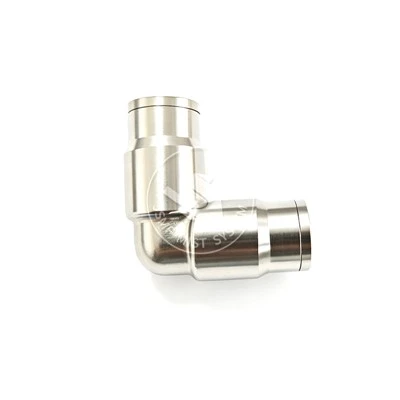
First off, let’s get on the same page about what we’re talking about. Welded connection fittings aren’t your run-of-the-mill threaded or grooved fittings. Threaded ones are great for low-pressure, small-bore jobs, but once you’re pushing 1,000 PSI and up, or even handling fluctuating pressures that spike unexpectedly, threaded joints can start to leak. Grooved? They’re handy for quick installs, but the gasket can degrade over time under sustained high pressure and corrosive fluids. Welded fittings, though—they’re fused together with heat, molten metal, and no gaps to seal. That’s the basic difference, and it’s the core of why they perform so well when pressure’s cranked.
Now, let’s talk hard numbers. Most of our welded fittings are rated for pressures ranging from 1,500 PSI all the way up to 10,000 PSI, depending on the material. For context, that’s way higher than what standard threaded fittings can handle—most threaded ones max out around 2,000 PSI before you start seeing joint failure. Why? Because a welded joint is a single, continuous piece of metal. There’s no weak point from threads cutting into the pipe wall, no gasket that can get pinched or worn. When done right, the weld itself is as strong as the base metal of the pipe. But here’s the catch: it all depends on how the weld is executed.
I’ve seen too many cheap fittings out there that use shoddy welding—quick stick welds with minimal penetration, or even just surface-level welds that look good but don’t actually fuse the two pieces together. Those fail, no question. But when you’re working with a reputable supplier (hi, that’s us), we use automated welding processes, like TIG or MIG, plus non-destructive testing (NDT) to check every single weld. That means we verify there’s no porosity, no cracks, no incomplete penetration. For high-pressure apps, even a tiny porosity in a weld can turn into a leak or a rupture once pressure ramps up. We take that super seriously.
Let’s dive into the materials, because that’s another big factor in how welded fittings perform under pressure. The most common materials we use are carbon steel, stainless steel, alloy steel (like Inconel or Hastelloy), and sometimes even duplex stainless steel for extra tough jobs. Carbon steel is workhorse stuff—great for oil and gas pipelines where pressures are high, and the material is strong enough to handle it. Stainless steel is ideal for chemical processing, where you’ve got both high pressure and corrosive fluids. Alloy steels? Those are for the extreme stuff—subsea pipelines, power plant boilers, where pressures can hit 15,000 PSI and temperatures soar too. The key here is matching the material to the application. If someone uses a carbon steel fitting in a high-pressure, highly acidic chemical line, even the best weld won’t hold up because the material itself will corrode. That’s why our team always works with customers to pick the right material first, before we even talk about welding.
Now, let’s talk about real-world scenarios, because numbers are great, but how do these fittings perform when the pressure’s not just steady, but fluctuating? Like, in a power plant boiler, the pressure goes up and down with demand every hour. Or in an oil refinery, where you’ve got startup and shutdown cycles that put stress on every component. Welded fittings handle cyclic pressure way better than threaded ones, because threaded joints can loosen over time as metal expands and contracts. Welded joints are rigid, sure, but when they’re done properly, they have the same thermal expansion rate as the pipe, so they move together. I worked with a refinery team last year that had been using threaded fittings for a high-pressure steam line. They were replacing them every six months because the threads were stripping and leaking. Switched to our welded fittings two years ago, and they haven’t had a single leak since. That’s the kind of win that makes this job worth it.
But wait, let’s not act like welded fittings are perfect. There’s a myth out there that they’re impossible to inspect, or that a bad weld will go unnoticed until it’s too late. That’s where modern NDT comes in. We use ultrasonic testing to check weld depth, radiography to look for internal flaws, and even pressure testing to 1.5 times the rated pressure to make sure every joint holds. For critical applications, we also do pressure cycle testing—simulating thousands of pressure spikes to make sure the weld doesn’t crack. I’ve had customers tell me they used to skip NDT on cheaper fittings, but after a weld failed and caused a shutdown that cost them hundreds of thousands of dollars, they now insist on our full testing.
Another point: size matters. If you need a 4-inch fitting for a high-pressure line, welded is still the way to go. Threaded fittings in that size would be massive, hard to install, and prone to leaks. Grooved fittings for large bore high-pressure lines? They’re bulky, and the gaskets can’t handle the torque needed to seal them properly. Welded fittings for large bore lines? We can fabricate them to exact specs, and the weld is as reliable as anything else. That’s why you’ll see welded fittings everywhere from refineries with 12-inch high-pressure lines to small-bore instrumentation lines in power plants.
Let’s address a common concern: installation. I know some teams are worried that welding takes more time and skill than just threading a fitting. Yeah, it does—if you’re doing it right. But the time you save in the long run by not dealing with leaks and replacements makes up for it. Plus, when you work with a reputable supplier like us, we provide detailed installation guides, and our team can even offer on-site support if you need it. We also train our customers’ crews on how to prep pipes for welding, how to check weld quality after installation, so they don’t have to guess. The last thing we want is for someone to mess up a good weld because they didn’t know the proper technique.
What about extreme conditions? Let’s say you’re working in an Arctic oil field, where temperatures drop to -40°F. Or a desert refinery, where temperatures spike to 120°F. Welded fittings handle temperature swings paired with high pressure way better than other types, because as long as the material is rated for the temperature, the weld doesn’t break down from thermal stress. We’ve supplied fittings to projects in Alaska and the Middle East, both with brutal conditions, and none of those teams have reported issues with our welded connections. That’s a testament to how well they perform under pressure—literally and figuratively.
Now, let’s get to the stuff that matters for you: when should you go with welded connection fittings for high-pressure apps? If you’re dealing with pressures over 1,000 PSI, if you have corrosive fluids, if you need to handle cyclic pressure or extreme temperatures, or if you’re working with large-bore lines. Those are the times when threaded or grooved fittings will start to fail, and welded ones will keep your line running.
I know cost can be a factor. Welded fittings might have a higher upfront cost than threaded ones, but when you calculate the cost of a shutdown, repairs, safety risks, and replacing failed fittings, they’re way more cost-effective in the long run. I’ve seen a customer save over $200,000 in a year by switching to our welded fittings, just because they didn’t have to deal with leak-related downtime. That’s not a small number, and it’s why more teams are making the switch.
At the end of the day, welded connection fittings perform in high-pressure applications because they’re engineered to eliminate weak points. The key is choosing a supplier that prioritizes quality materials, proper welding techniques, and rigorous testing. Cheap fittings might look the same, but they won’t hold up when the pressure is on.
If you’re currently dealing with leaks, frequent fitting replacements, or just want to make sure your high-pressure lines are as reliable as possible, I’m here to help. We work with teams across all industries, from small fabrication shops to large energy companies, and we can help you pick the right welded connection fittings for your specific application. No generic advice, no pushy sales talk—just real answers and quality products that you can count on. Reach out to our team to talk through your project, get a custom quote, or ask any questions you have about how our fittings perform in high-pressure scenarios. We’re here to make your job easier, so you can keep your operations running smoothly.
Now, let’s get one thing straight: I’m not here to say welded fittings are the only solution. But in high-pressure applications, they’re hands down one of the most reliable, long-lasting options out there. The numbers, the real-world projects, the feedback from customers—all of it adds up to one thing: when pressure is high, welded connection fittings are the way to go.
Whether you’re a project manager trying to avoid a costly shutdown, an engineer designing a new line, or a maintenance tech tired of fixing the same leak over and over, give our team a shout. We’ve got the experience, the products, and the knowledge to make sure your welded fittings perform exactly when you need them to.
Snap-in Connection Piece References:
- Manufacturing Chemists Association. (2020). Pressure Piping Systems for Industrial Applications. MCA Press.
- American Society of Mechanical Engineers. (2021). ASME B31.3 Process Piping Code. ASME International.
- National Association of Corrosion Engineers. (2019). Materials Selection Guide for High-Pressure, Corrosive Service. NACE International.
- Welding Research Council. (2022). Weld Quality Assurance for High-Pressure Piping Components. WRC Bulletin 782.
Jinsheng Mist Forest-High Pressure Mist System
Jinsheng Mist Forest-High Pressure Mist System is one of the most experienced welded connection fittings manufacturers and suppliers in China, featured by quality products and low price. Please rest assured to wholesale bulk welded connection fittings in stock here and get pricelist from our factory. Customized orders are welcome.
Address: 109 Yonghong Road, Wenjiang District, Chengdu City, Sichuan Province, China
E-mail: 18190767523@163.com
WebSite: https://www.jswsmist.com/
